As the House crushed Republican resistance to a Trump-backed funding package to end the latest partial government shutdown, lawmakers in the upper chamber weren’t confident that Congress could avoid being in the same position in the coming weeks.
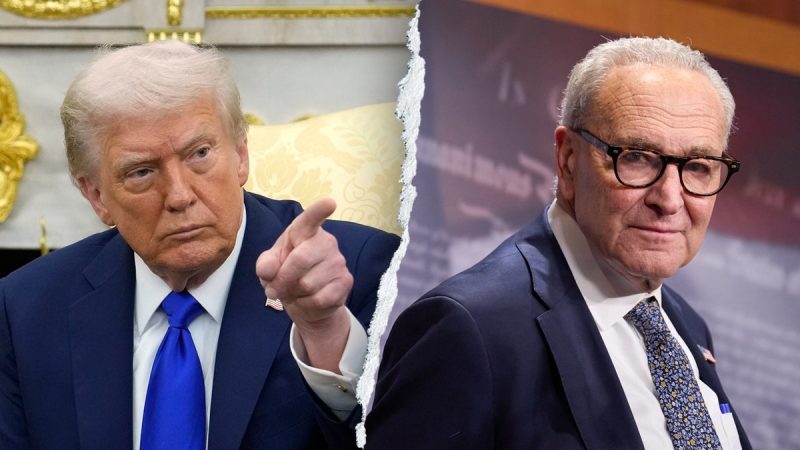
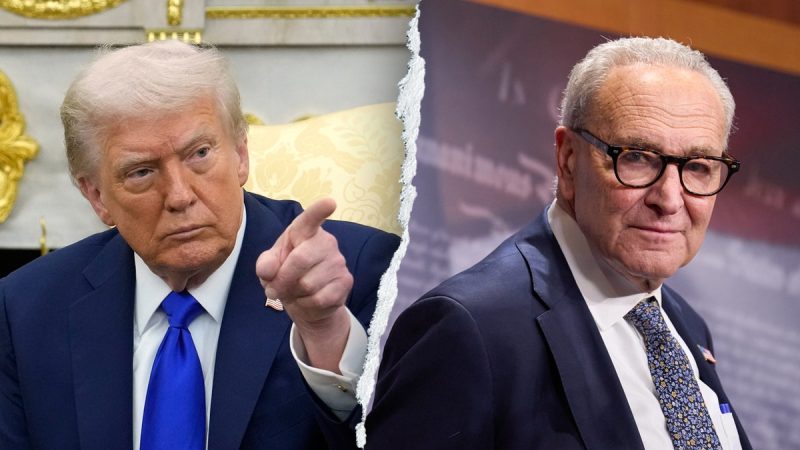
President Donald Trump and Senate Minority Leader Chuck Schumer, D-N.Y., brokered the deal to end the shutdown last week. That funding truce included a move to sideline the controversial Department of Homeland Security (DHS) funding bill in favor of a short-term extension to keep the agency open.
The House’s passage of the package, which funds 11 out of 12 government agencies under Congress’ purview, sets the stage for tense negotiations between the White House and Senate Democrats over reforms to DHS.
But several Senate Republicans are questioning whether two weeks, which had shrunk to just nine days as of Wednesday, would be enough time to avert another partial shutdown — this time only for DHS.
‘I think it’s gonna be very difficult to get the funding bill done for DHS in two weeks,’ Sen. Rick Scott, R-Fla., told Fox News Digital.
Scott was one of a handful of Republicans in the upper chamber that rejected the compromise plan and the underlying original package because of bloated spending on earmarks and concerns that Senate Democrats would effectively try to kneecap Immigration and Customs Enforcement (ICE) operations across the country.
‘We’re going to be in a worse spot,’ Scott said. ‘I mean… all their earmarks got done, and then now they’re going to want to, you know, they want to [get] busy de-fanging and defunding ICE.’
Congressional Democrats wanted to relitigate the bipartisan DHS bill after the fatal shooting of Alex Pretti during an immigration enforcement operation in Minneapolis. The demand forced Trump to intervene and thrust the government into a partial shutdown on Friday.
While the funding deal made it across his desk, it won’t get Congress out of the jam it’s in, given the short amount of time lawmakers have to negotiate the bill, which is consistently the most difficult spending bill to pass year in and year out.
Senate Majority Leader John Thune, R-S.D., noted that once negotiations began, Congress had a ‘very short timeframe in which to do this, which I am against.’
‘But the Democrats insisted on, you know, a two-week window, which, again, I don’t understand the rationale for that,’ Thune said. ‘Anybody who knows this place knows that’s an impossibility.’
Some Senate Democrats did not want to weigh in on a hypothetical scenario just days away, but Sen. Mark Kelly, D-Ariz., contended that because of the events in Minnesota, ‘there should be some motivation across the aisle to do something on, you know, all these issues.’
‘I mean, I think [DHS Secretary] Kristi Noem should be fired, leadership needs to be changed at ICE, their budget needs to be the right size,’ Kelly said. ‘We got to get them looking like normal police officers.’
Senate Appropriations Chair Susan Collins, R-Maine, struck a more positive tone.
She told Fox News Digital that Congress would be in a much better position, considering that lawmakers will have passed 11 out of the 12 bills needed to fund the federal government.
‘We’ll now start the negotiations on DHS, and I hope we’ll be successful, but I don’t see how you can compare where we are today,’ Collins said.
Thune believed that Noem’s announcement that ICE agents in Minneapolis would begin wearing body-worn cameras could act as a sweetener for Democrats. There is already $20 million baked into the current bipartisan DHS funding bill for body cameras.
Schumer rejected that olive branch from Noem, arguing that it didn’t come nearly close enough to the portfolio of reforms Democrats wanted for the agency. And he reaffirmed that Senate Democrats wanted actual legislative action on DHS reforms, not an executive order.
‘We know how whimsical Donald Trump is,’ Schumer said. ‘He’ll say one thing one day and retract it the next. Same with Secretary Noem.’
‘So, we don’t trust some executive order, some pronouncement from some Cabinet secretary. We need it enshrined into law.’
When asked if lawmakers would need to turn to another short-term funding patch, Schumer argued that ‘if Leader Thune negotiates in good faith, we can get it done. We expect to present to the Republicans a very serious, detailed proposal very shortly.’
But Thune has said for several days that it would be the White House in the driver’s seat, and ultimately it would be Trump who could broker a new deal.
‘But at some points, obviously it has to be the White House engaged in the conversation with the Senate Democrats, and that’s how that thing’s gonna land,’ Thune said.